
LEM revisits “ta erotika” with the author of Eva’s Garden
Read Time: 8 minutes
“The only thing I say I know is ta erotika.” – Plato, Symposium
Interview with Brazilian author, Andreia Rodrigues

For centuries many of the most culturally dominant erotic narratives have been driven by mail centric frameworks think Nabokov or Henry Miller. This month, however, in response to our Ageless Sexuality themed call for submissions on Duotrope, we invited author, Andreia Rodrigues to talk to us about the reason she chose to write in an erotic format and what’s behind her essay and its masculine and feminine balance of protagonist and plot against the backdrop of aging.
Rodriguez features the cultural anomaly of a sexually vibrant aging female figure not as a fading or invisible victim but as someone armed with the courage to be seen by the male gaze on her own terms. She does this through inner curiosity and psychological awareness.
Because the power to transgress the female sexual ceiling is picking up speed for women in the 21st-century, we wanted to look back at where erotica found its origins and how the ascension of digital media and its relationship to time, the instantaneous in particular, allows this platform to explore its ability the deliver an up-leveling of conscious aging.
The idea of a erotics seems to go back to Socrates and the claim that “ta erotika” was his only area of expertise. Since the Greek sense of poetics around love, Eros, parallels the focus on philiosoohical process of “erotan”, to ask a question shares the same root as love itself. Perhaps to love is made possible through questioning. Certainty, then, may divide the emotional aspects of the erotic by its proximity to fragility.
As Power dissolves in the moment you reach for it, surrender is at the center of erotica itself. To contextualize the erotic is akin to love, an imperative that clarifies the confused hyper-state of arousal; its boundaries in media bookended by the performative and goal driven pornographic tone and the continuum of pleasure in its expression of love, self, other, erotica which informs the chasm between love and power.
Eva’s Garden works as a metaphorical exploration of the space between this libidinal quandary. Eva allows herself to expand between each edge through her acceptance of her corporeal reality, being in the last third of her life. Time itself becomes the biological imperative creating tension with the Self’s sense of want. What lives beyond that impetus toward wholeness and the cultural language that dilutes the power of the aging female form is the body’s effort to ceases responding to nature’s reproductive imperative. Freedom to restructure itself neurally opens up with nature now in the back seat instead of being the decision maker.
In the world of the garden, Eva shifts with the neural changes the hormonal wave of maturity carves out as a woman goes through different stages of life transformation. A symbolic mapping of Aphrodite’s trials put before her daughter, Psyche, similarly require Herculean aspiration to meet and conquer, to reinterpret the wisdom of an experience-informed psychology of the masculine gaze that is alchemically of service to the libido.
As a result, Eva emerges into a seasoned understanding of her desire. Like Psyche, Eva gives birth to Pleasure, new life unadulterated by the tirade of patriarchal dynamism. Through Rodrigues’ development of a pathway to her future self, womanhood in the last third of life may be a little less sexually fettered.
Consequently, while Eva’s admirer, Kasper, watches from his window overlooking the garden, he bears witness to a mythopoetic shift in time; the garden’s gods are now older gods who dream a myth unfolding into a modern skin.

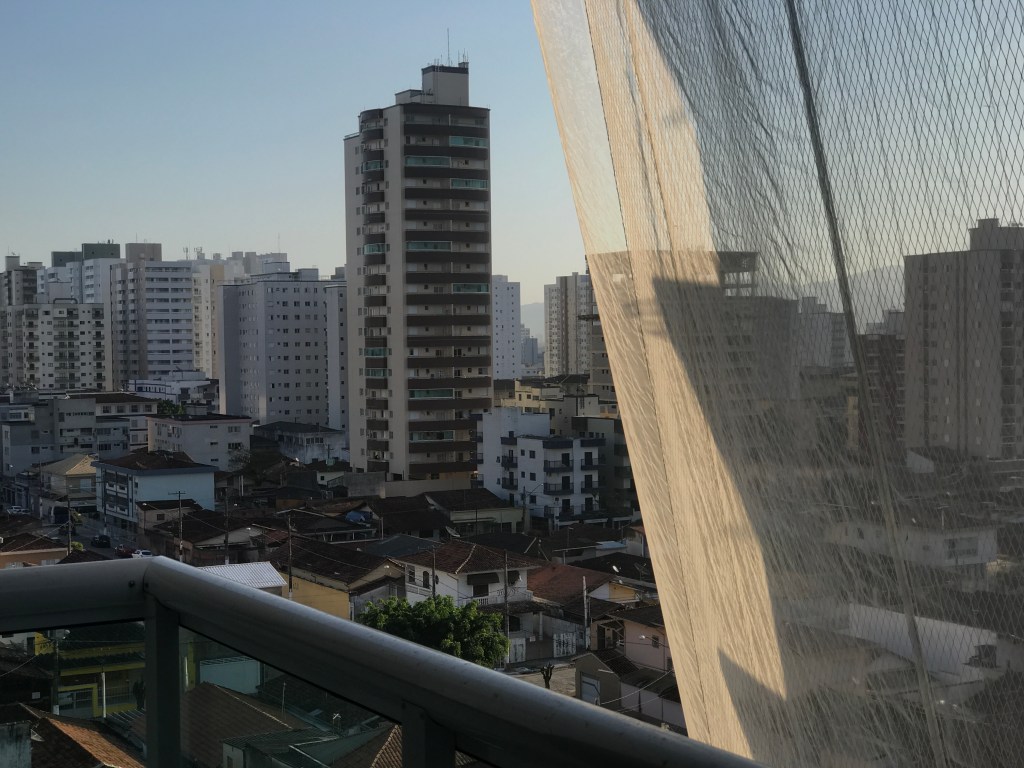
LEM I read you’re from Brazil. Limit Experience Journal was founded in 2019 while I lived in Sao Paulo. Locations sometimes drive an artist’s work as they nourish ideas. How do your origins affect you as a writer?
AR Nice that you lived in São Paulo! It’s a fascinating place, and it has certainly shaped my work. Brazil, and especially the periphery of São Paulo, built who I am and imprinted itself on me: happy, sad, energetic, insomniac. There is no moderation in São Paulo, nor in me or my life. The tragedies are daunting, and the joys are sublime; those extremes fuel my writing, as do the love and urgency of Brazilian culture. We are passionate and intense people, unafraid to show emotion and reveal our true selves. We’re also deeply aware of our finitude, and that awareness gives me the courage to write without the restraints I sometimes observe in other writers.
“Works of Art are of an Infinite Solitude.” – Rainer Maria Rilke
LEM When did you first see yourself as a writer and what did those efforts look like inside yourself, of course, but also outside you, across the exterior expression of your creative life?
AR I’ve seen myself as a writer ever since I learned to read and write. It was the first profession I ever dreamed of. The world of words is my home, something I discovered as soon as that world opened itself to me. When I was nine, I wrote a little book. It wasn’t a good one, but I finished it, and that, to me, is what makes a writer: starting a story and carrying it through to the end, enduring the struggles in between just for the urge of it.
For me, the efforts of a writer are expressed through being open to the world in a particularly profound way. You can’t help it. You find yourself writing because your experience of life is too intense to keep inside. That’s why writing isn’t just something you do, it’s a way of living. It shows itself when you can put words to things in ways no one else can. When you notice, hear, feel what others take for granted. When you manage to capture true humanity in language. It’s a difficult exercise, but for many of us, it’s also unavoidable and necessary.
LEM When you say that writing is unavoidable why does it feel that way for you? What would happen if you didn’t write?
AR This question made me think of a quote from Rainer Maria Rilke: “Works of art are of an infinite solitude.” This is what I feel, an infinite solitude. It doesn’t come from a lack of company, but from a lack of connection. The kind of connection that bridges voids, ideas, and longings.
“…I wasn’t just telling a story; I was feeding my infinite solitude.” – A.R.
Writing soothes that solitude. It’s my way of reaching toward a higher consciousness. The work of finding words and releasing them from me brings a sense of catharsis and connection. With whom, I don’t know. With true humanity? With future readers? With the page itself? The answer to this doesn’t really matter.
Writing allows me to fill a void and brings the colours my life lacks.
Through writing, I make sense of my existence and taste experiences beyond my reach. Take “Eva’s Garden”, for example. That story carries a beauty life hasn’t yet gifted me. Unrestrained desire that transcends fear, age, and prejudice. Few live such freedom; Annie Ernaux might have had. I was so touched by her experience in “Le Jeune Homme” (“The Young Man”) that I felt the urge to create my own version of that kind of encounter. In doing so, I wasn’t just telling a story. I was soothing my infinite solitude.
Join LEM as a subscriber and read Eva’s Garden in its entirety December 19, 2025 here at LIMIT EXPERIENCE MAGAZINE.com.
LEM In our correspondence you mentioned that you intend for your piece, Eva’s Garden to have a transformative effect on readers. What is it about the piece that fulfills that intention and, as a writer, how did you construct the effect?

Subscribe to continue reading
Subscribe to get access to the rest of this post and other subscriber-only content.
 LIMIT EXPERIENCE